Stadium & matchday guide
Anfield
Plan your visit to Anfield: travel, entrances, facilities, local area and the matchday experience. Seating advice is one part of this stadium guide.
ContentsJump straight to the section you need
01 · Seats
Choosing a stand at Anfield
Compare The Kop, Main Stand, Sir Kenny Dalglish Stand and Anfield Road Stand by view, atmosphere and seat position.
.jpg)
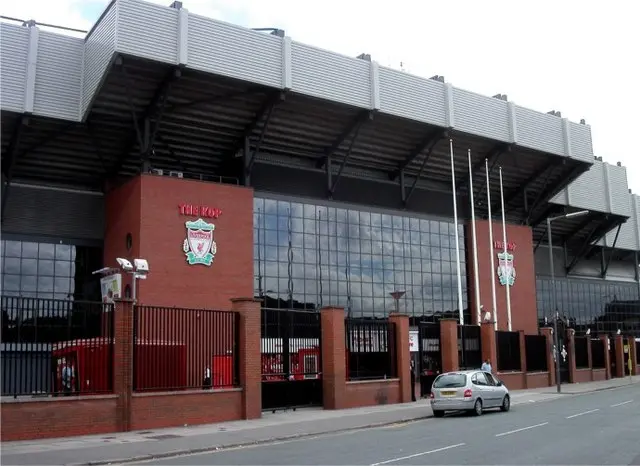
The Kop
The most atmospheric option. Behind the goal, loud and at the heart of Liverpool supporter culture.
Orientation photo only, not a promise of your seat view. Check the exact block and row in the official 3D map. Mike Pennington · CC BY-SA 2.0_panorama_view_from_main_stand.jpg)
Main Stand
The clearest overall view, especially from central blocks. A strong choice for a first visit.
Orientation photo only, not a promise of your seat view. Check the exact block and row in the official 3D map. Yurificacion · CC BY-SA 4.0.jpg)
Sir Kenny Dalglish Stand
A classic side-on view opposite the Main Stand, usually with a well-balanced perspective.
Orientation photo only, not a promise of your seat view. Check the exact block and row in the official 3D map. Mike Pennington · CC BY-SA 2.0
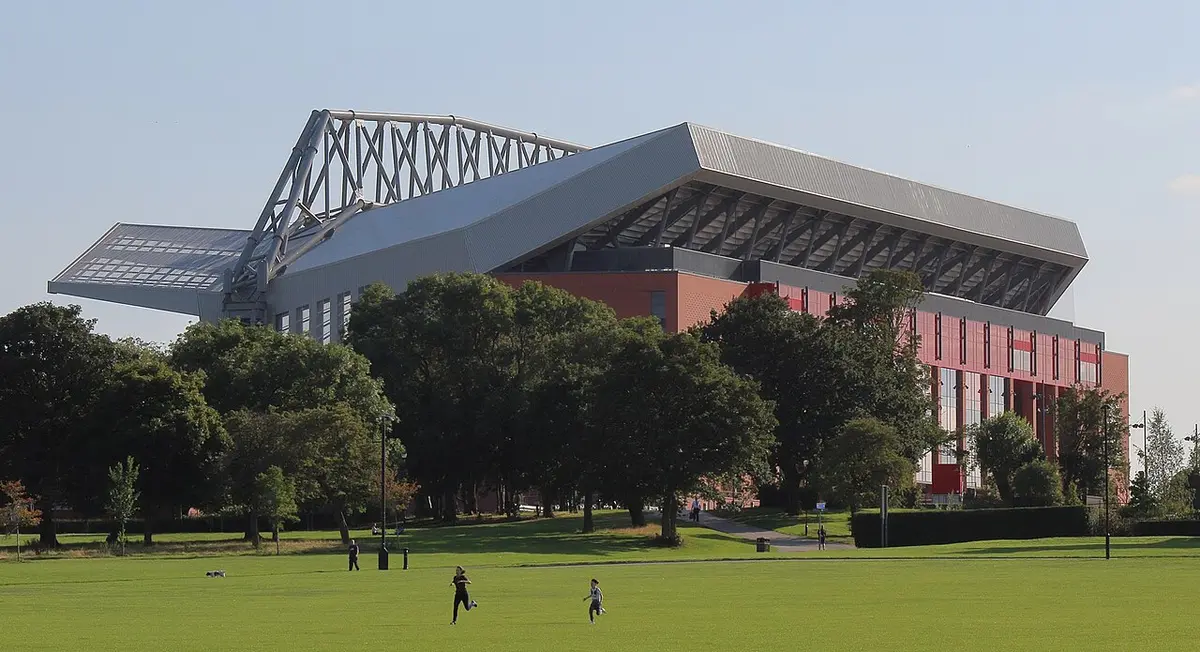
Anfield Road Stand
Behind the opposite goal; parts of this stand are allocated to away supporters depending on the fixture.
Orientation photo only, not a promise of your seat view. Check the exact block and row in the official 3D map. Andy Nugent · CC BY-SA 2.5Anfield: Seating plan
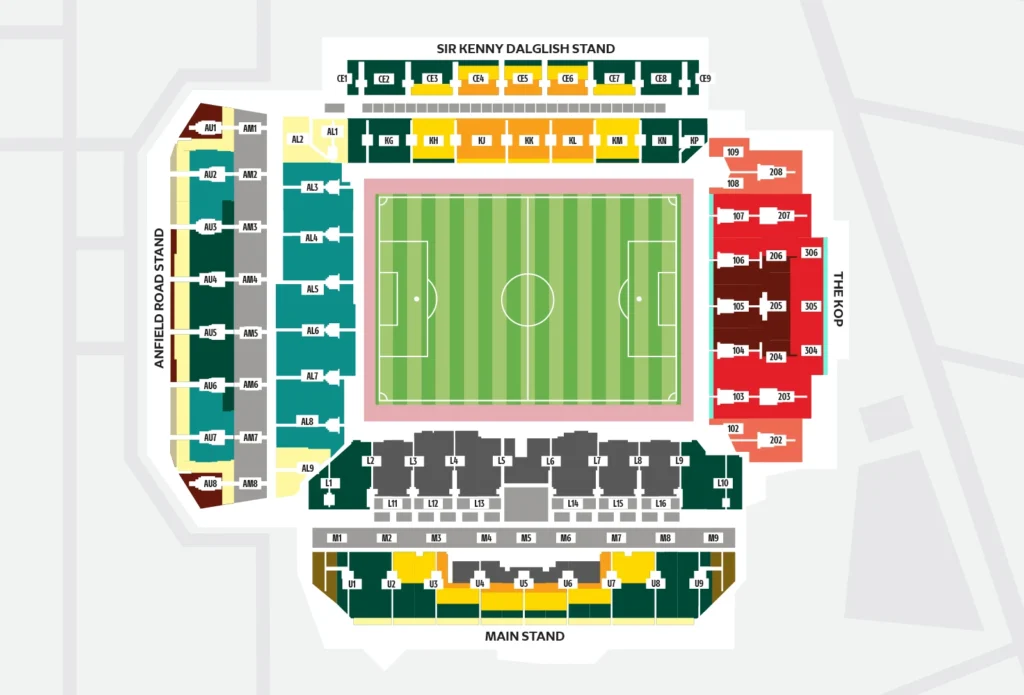
This Anfield seating plan and matchday guide is built for an actual visit. Compare the best seats at Anfield, the view from each stand, lower and upper tiers, restricted-view risks and the away end. Then use the practical sections for transport, parking near Anfield, hotels, pubs, bag rules and the official stadium tour.
Seat decision
Anfield seating plan: how to choose the best seats
The Anfield seating plan has four stands: the Main Stand, Sir Kenny Dalglish Stand, The Kop and Anfield Road Stand. The stand name is only the start. Your view from the seat also depends on the tier, height, exact block and any restricted-view warning. Check the precise block and row in the official Anfield 3D seat map before buying.
Central on the side
A central block in the Main Stand or Sir Kenny Dalglish Stand makes formations, movement and both goals easiest to follow.
The Kop
Choose it when songs and supporter culture matter more than a tactical overview. The action feels intense, but the far goal is harder to judge.
Higher but central
A higher seat near the halfway line can give a better overall view than a more expensive low seat. Check height and rake in the 3D model.
Predictable access
Prioritise a clear view, manageable stairs and a block close to your stated entrance. Arrive early so children are not navigating the heaviest crowds.
Anfield stand and seating plan summary
| Stand | View and atmosphere | Best for | Check before buying |
|---|---|---|---|
| Main Stand | Side-on view with the clearest overall perspective from central, mid-height blocks. | Best seats for a first visit and tactical view. | Tier, walking distance and any restricted-view notice. |
| Sir Kenny Dalglish Stand | Traditional side-on view opposite the Main Stand. | A balanced view of both goals. | Exact block position toward The Kop or Anfield Road. |
| The Kop | Behind-goal view and Anfield’s strongest home atmosphere. | Songs, supporter culture and intensity. | The far goal is harder to judge, especially from lower rows. |
| Anfield Road Stand | Modern behind-goal upper and lower-tier seating. | Elevated end view, hospitality and the away allocation. | Home/away designation, tier and fixture-specific access. |
Anfield lower tier or upper tier: which view is better?
| Position | Main strength | Trade-off | Best for |
|---|---|---|---|
| Low / close to the pitch | Players, tackles and speed feel immediate. | The far end and tactical spacing are harder to read. | Proximity, atmosphere, photos |
| Mid-height | The best balance between closeness and overview. | Often among the most sought-after seats. | First-timers, families |
| Upper areas | A clear tactical view of the whole pitch and stadium. | Further from the action; consider stairs and steeper access. | Match analysis, overview |
| Behind a goal | An intense view of attacks at your end. | Distances and incidents at the opposite goal are harder to assess. | Atmosphere, goalmouth action |
Restricted-view seats at Anfield: confirm the block, row, seat, home or away allocation and every “restricted view” or access warning before paying. A roof edge, railing, overhang or stadium structure can affect only certain rows, so do not judge the view from the stand name alone.
Where is the Anfield away end?
Away fans at Anfield are normally seated in part of the Anfield Road Stand. The precise away section, ticket allocation and entrance can change by fixture and competition. Treat your match ticket and Liverpool FC’s current visiting-supporter guide as authoritative rather than relying on a generic seating chart.
Entrance and orientation
Anfield stadium map: find your entrance, block and seat
Anfield sits in a dense residential area and each stand has different approaches. Walking around the outside takes much longer in a matchday crowd than it appears on a map, so the details on your ticket matter.
Do not use a famous gate as your entrance: Shankly Gates and Paisley Gateway are landmarks. Your ticket’s entrance/turnstile controls where you enter. Away allocations and access routes can change by fixture.
- Check the ticket before leaving. Save the mobile ticket correctly and note the stand, block, row and seat. Confirm the recommended entrance or turnstile.
- Approach the correct side of the stadium. Navigate to your stand, not simply to “Anfield”. Signs and stewards can guide the final section.
- Use the stated turnstile. Have your phone and ticket ready. Large bags and unresolved ticket issues cause delays; read the current stadium rules before travelling.
- Follow block, tier, row and seat in that order. If signage is unclear, ask a steward immediately rather than continuing in the wrong direction.
Time buffer: first-time visitors should aim to be at the stadium about 90 minutes before kick-off. Arrive two to three hours early if you also want the club shop, murals or food.
Bus, train, taxi and walking
How to get to Anfield
Anfield has no railway station of its own. Liverpool Lime Street is roughly two miles away in the city centre. For most visitors, rail plus a matchday bus is easier than hiring a car.
917 matchday bus
The express service runs between Liverpool city centre and Anfield. It is normally the simplest option for first-time visitors staying centrally.
Sandhills + Soccerbus
Take Merseyrail to Sandhills and use the Soccerbus to the stadium on matchdays. It works well when your journey already uses the local rail network.
17 or 26
Route 17 serves Queen Square and route 26 serves Liverpool ONE. Routes 14, 19 and 68/168 also stop within walking distance; check live matchday times.
Taxi
Useful before the match, less predictable afterwards. Agree a collection point a short walk beyond the closest road closures.
Choose by starting point
| Starting point | Recommended route | Why |
|---|---|---|
| Lime Street / city centre | 917 or a regular bus | No transfer to local rail is required. |
| Merseyrail network | Sandhills + Soccerbus | A dedicated matchday connection continues to the stadium. |
| City centre with time | Bus out; walk or bus back | You keep more options when post-match traffic peaks. |
| Bicycle | Cycle Hub by Stanley Park | Liverpool FC’s staffed Cycle Hub offers a practical alternative. |
Plan the return before kick-off: decide whether you will use the 917, Soccerbus, walk towards the centre or meet a taxi away from the closures. Streets and stops are busiest immediately after full-time.
Journey time and realistic matchday budget
- 917 matchday busAbout 20 minutes once moving; allow 35–60 minutes including queues and traffic. A normal local bus budget is roughly £2–£3 each way, but the special-service fare must be checked on the day.
- Sandhills + SoccerbusUsually 10–15 minutes by train from central stations plus the shuttle and waiting time. Budget roughly £5–£8 return for the combined local journey, depending on ticket type.
- Regular bus 17 or 26Typically 25–40 minutes from the centre before matchday congestion. Budget around £2–£3 each way and use contactless where accepted.
- Taxi or ride-hailingNormally 10–20 minutes from the centre before closures, but 30–60+ minutes near kick-off. A sensible planning range is £10–£18 outbound and £15–£30 after the match when demand is high.
- Walking from Lime StreetAbout 45–55 minutes for most visitors. It costs nothing and avoids post-match queues, but use a mapped, well-lit route and dress for Liverpool weather.
- Airport to AnfieldAllow about 35–60 minutes by taxi outside severe traffic; a planning range is £25–£40. Public transport via the centre is cheaper but needs more time and at least one change.
Prices are planning ranges, not quoted fares. Traffic, surge pricing, ticket type and fixture policing change the final cost. Check Merseytravel/Stagecoach and your taxi app on the day.
Driving and park-and-ride
Parking near Anfield: what actually works
The surrounding streets are covered by resident parking controls. Liverpool FC states that general paid parking is not available in Stanley Park or on Utting Avenue on matchdays. Vehicles parked illegally may be fined or removed.
Park-and-ride
Park at a suitable Merseyrail station or in the city centre, then use rail plus Soccerbus or the 917 for the final leg.
Searching residential streets
It wastes time, disrupts the neighbourhood and can become expensive. Do not assume legal street parking will be available near the stadium.
Request in advance
Accessible matchday spaces are very limited and must be requested through Supporter Services or during the ticket process. A place is not guaranteed.
Stanley Park Car Park
Limited parking may be available for tours when Liverpool are not at home. It is unavailable to tour visitors on home matchdays.
Food, shops and the neighbourhood
What you will find around Anfield
The neighbourhood is part of the matchday experience, but it is not a large shopping district. Walton Breck Road is the practical spine: club merchandise, independent scarf sellers, convenience shops, takeaways and matchday pubs are concentrated here. For a sit-down meal or broad retail choice, eat in central Liverpool before travelling.
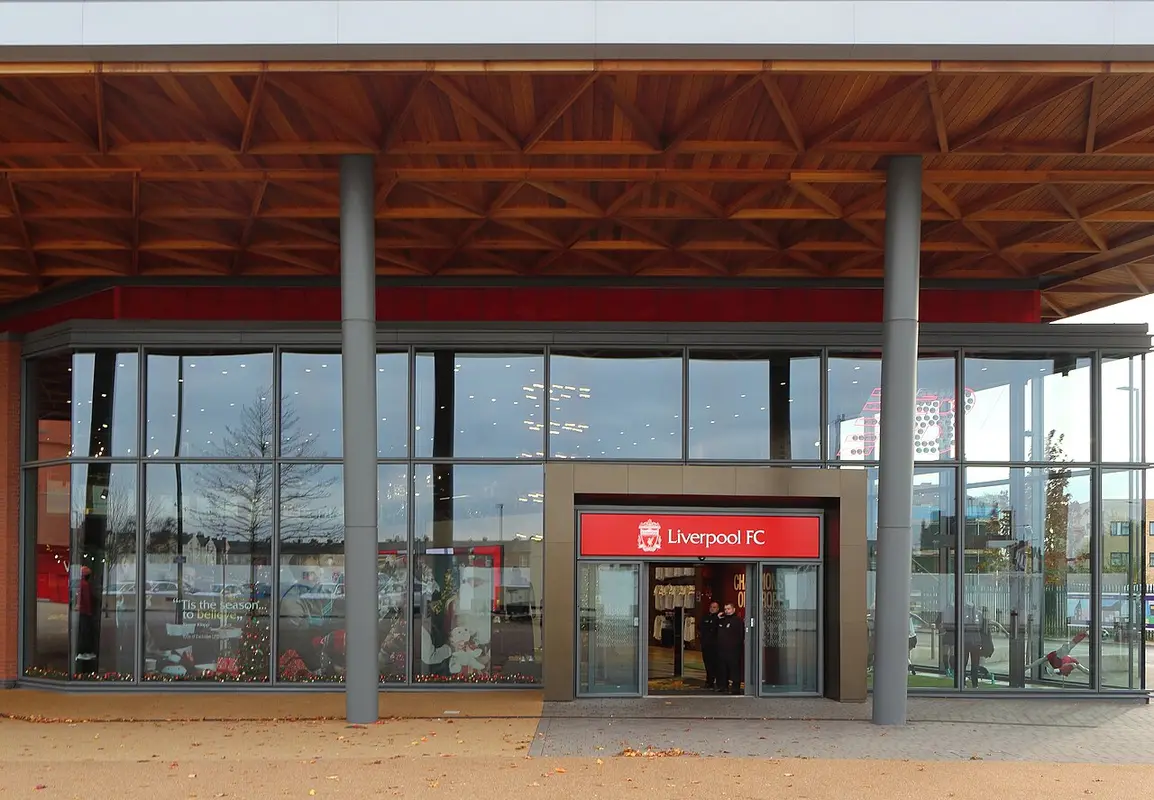
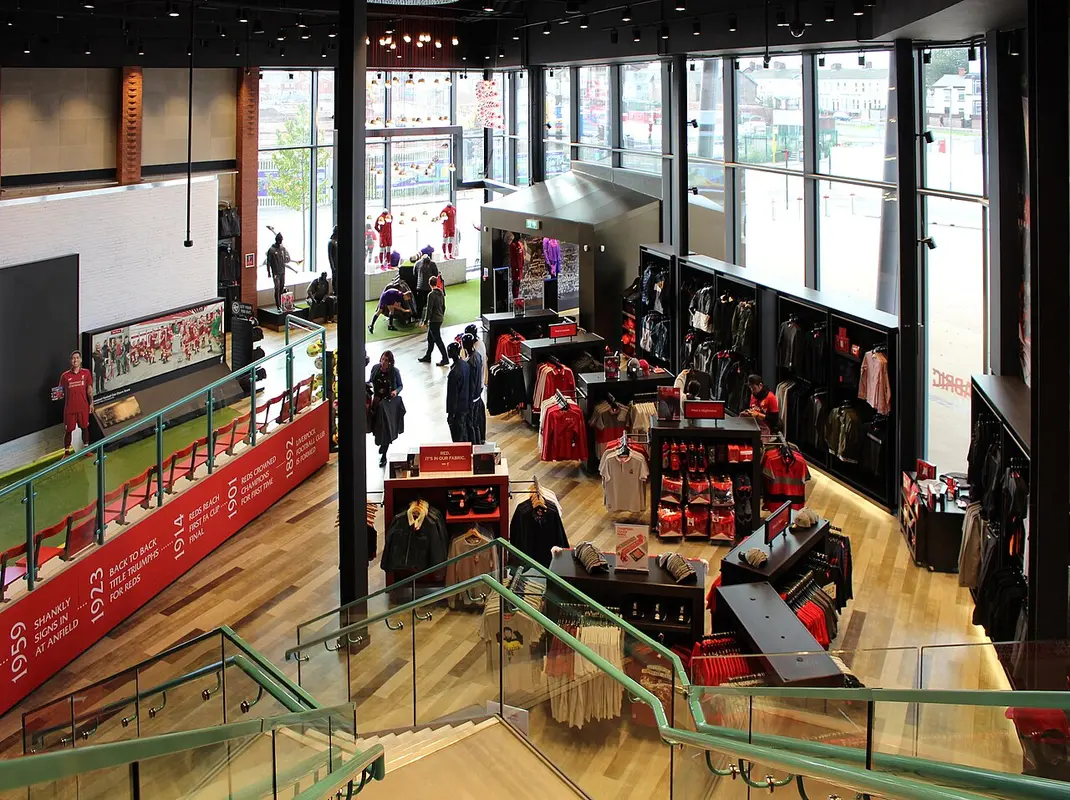
Official LFC Store
The main club shop opposite Stadium Tours sells current shirts, personalised printing, training wear, scarves, gifts and children’s ranges. As a planning guide, allow roughly £20–£35 for scarves/caps, £35–£70 for leisurewear and £80–£120+ for an adult shirt with printing. Visit 2–3 hours early.
Stadium concessions
Expect pies, hot dogs or burgers, snacks, soft drinks, tea/coffee and beer where licensed. A realistic stadium budget is about £5–£8 for a hot item, £3–£4 for a soft drink and £5–£7 for beer; exact menus and card-only rules can change.
Takeaways and convenience shops
Walton Breck Road offers fish and chips, burgers, pizza, fried chicken and meal deals. Budget around £6–£12 for takeaway food and £2–£5 for water/snacks. Buy essentials before the final 60 minutes, when queues peak.
Matchday pubs
The Sandon and other football pubs around the ground offer pre-match atmosphere, usually with beer, soft drinks and simple food. Entry policy and capacity vary; allow roughly £5–£7 per pint and do not assume children or away colours are accepted.
Murals and photo stops
Allow time for streets around Anfield Road and Walton Breck Road. Use safe walking routes and respect homes, doorways and local residents.
Museum and stadium tour
A separate non-matchday visit gives you the most time inside the stadium. Matchday tours operate differently and have limited availability.
Bring: a charged phone, ticket, power bank, weather-appropriate clothing and as little baggage as possible. Recheck Liverpool’s bag and prohibited-item rules on the day.
Accommodation
Hotels near Anfield: where should you stay?
| Area | Advantages | Trade-offs | Best for |
|---|---|---|---|
| City Centre / Lime Street | The largest hotel and restaurant choice, strong rail links and simple buses to Anfield. | Many supporters use the same buses after the match. | Best all-round choice for a first visit. |
| Liverpool ONE / Waterfront | Close to restaurants, attractions and the bus station. | Further from Lime Street and may involve extra walking. | A wider Liverpool weekend. |
| Anfield | Walk to the stadium and avoid the post-match bus queue. | Less choice outside matchday and further from many city attractions. | Trips built almost entirely around the match. |
Our recommendation: stay in the city centre on a first Liverpool trip and use the 917 or Soccerbus. Choose Anfield when a very late finish or walking distance is the priority. A separate hotel guide can carry specific, regularly updated recommendations.
Visiting without a match
Anfield stadium tour: tickets, museum and parking
The standard LFC Stadium Tour, museum and matchday products have different times and access arrangements. Book only through the official site. Check-in is opposite the club shop; Liverpool FC describes Stanley Park Car Park as roughly a five-to-ten-minute walk away. Tour parking is not available on Liverpool home matchdays.
Checked information
Official sources
Events & tickets
Upcoming events at Anfield
Football matches, concerts and other upcoming dates at this stadium.
No verified upcoming event is listed yet. Check the venue’s official calendar before planning your trip. Official stadium information ↗
Dates, times, ticket availability and prices can change. Confirm details with the organiser before booking travel.
03 · Matchday
Your matchday timeline
3 hours before
Arrive in Anfield, explore the area and check the latest access information.
90 minutes before
Head to the correct entrance and allow time for security checks and queues.
45 minutes before
Find your seat, check the view and take in the build-up before kick-off.
Matchday essentials
- Check the exact block, row and any restricted-view warning before buying a ticket.
- Use Liverpool FC’s current travel and access information on the day of the match.
- Allow extra time after full-time: buses, taxis and surrounding roads become very busy.
05 · FAQ
FAQ
What are the best seats at Anfield for a first visit?
Choose a mid-height central block in the Main Stand or Sir Kenny Dalglish Stand. You will see both goals and the team shape more clearly than from a low corner or a seat behind the goal.
Which Anfield stand has the best atmosphere?
The Kop is the strongest choice for atmosphere and Liverpool supporter culture. The trade-off is a behind-the-goal view, so action at the far end is harder to judge.
Is a lower or upper-tier seat better at Anfield?
Mid-height usually gives the best balance. Lower rows feel closer to the players; upper areas provide a clearer tactical view but involve more height, stairs and distance from the pitch.
What does restricted view mean at Anfield?
It means part of the pitch or goal may be obscured by stadium structure, railings or the position of the seat. Check the exact block, row and warning on the ticket, then compare it in the official 3D seat map before paying.
Where do away fans sit at Anfield?
Away supporters are normally allocated part of the Anfield Road Stand. The exact blocks and size of the allocation can change by fixture and competition, so use the information issued with your ticket.
How do I find my gate, block, row and seat?
Read the ticket in that order before travelling: stand, entrance or turnstile, block, row and seat. Approach the correct side of the stadium and ask a steward as soon as signage becomes unclear.
How early should I arrive at Anfield?
Arrive about 90 minutes before kick-off for a first visit. Allow two to three hours if you also want food, murals, the official shop or time to solve a mobile-ticket problem.
What is the easiest way to get from Liverpool city centre to Anfield?
For most first-time visitors, the 917 matchday bus is the simplest direct option. Sandhills station plus Soccerbus is convenient if you are already using Merseyrail; regular buses 17 and 26 are alternatives.
How much is a taxi from Liverpool city centre to Anfield?
Use roughly £10–£18 as an outbound planning range, but traffic and surge pricing can raise it. After the match, walk beyond the closest road closures before ordering and expect a longer wait or a fare around £15–£30.
Can I park near Anfield on matchday?
Do not rely on finding legal street parking near the stadium. Resident restrictions and road controls apply; park in the city centre or at a suitable rail station and complete the journey by bus or Soccerbus.
Can I take a bag into Anfield?
Take as little as possible and check Liverpool FC’s current bag and prohibited-item rules before leaving. A large or non-compliant bag can delay entry, and storage should never be assumed.
Where should I buy Liverpool tickets safely?
Start with Liverpool FC and authorised hospitality or ticket partners. Verify the seller, seat details, delivery method and guarantee before paying; avoid relying on an unverified social-media seller.
Last checked: 2026-09-20